Senior Full-Stack Engineer at Schoolz
Routz
Fleet management and school transportation for operators, drivers, and families
- When
- Jan 2025 – present
- Team
- Part-time consultant until Apr 2026, full-time since May 2026. I own the web frontend and the real-time services.
- Vue 3
- Node.js sockets
- GPS tracking
- In-app chat
- PayTabs
- Arabic/English
In short
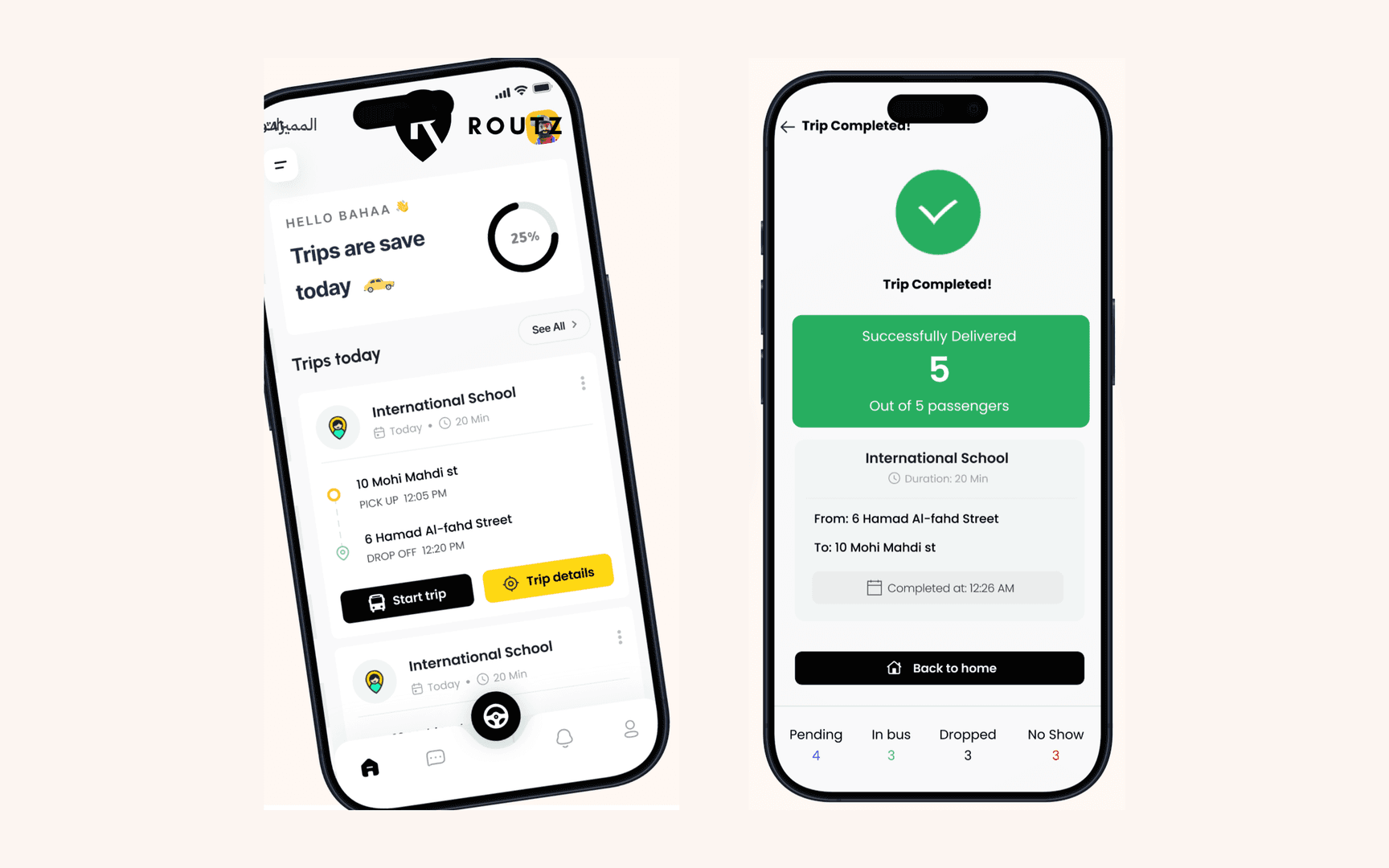
Routz is Schoolz's cloud platform for school and corporate transport in Egypt and the region. Operators plan routes and trips, follow vehicles live, and sell subscriptions to families; drivers and passengers use the Routz and Routz Captain mobile apps. I joined in January 2025 and built the Vue 3 web application from the first screen: the admin and client dashboards, the live tracking and chat layer over custom Node.js socket services, and the passenger subscription flow with online payment.
My role and scope
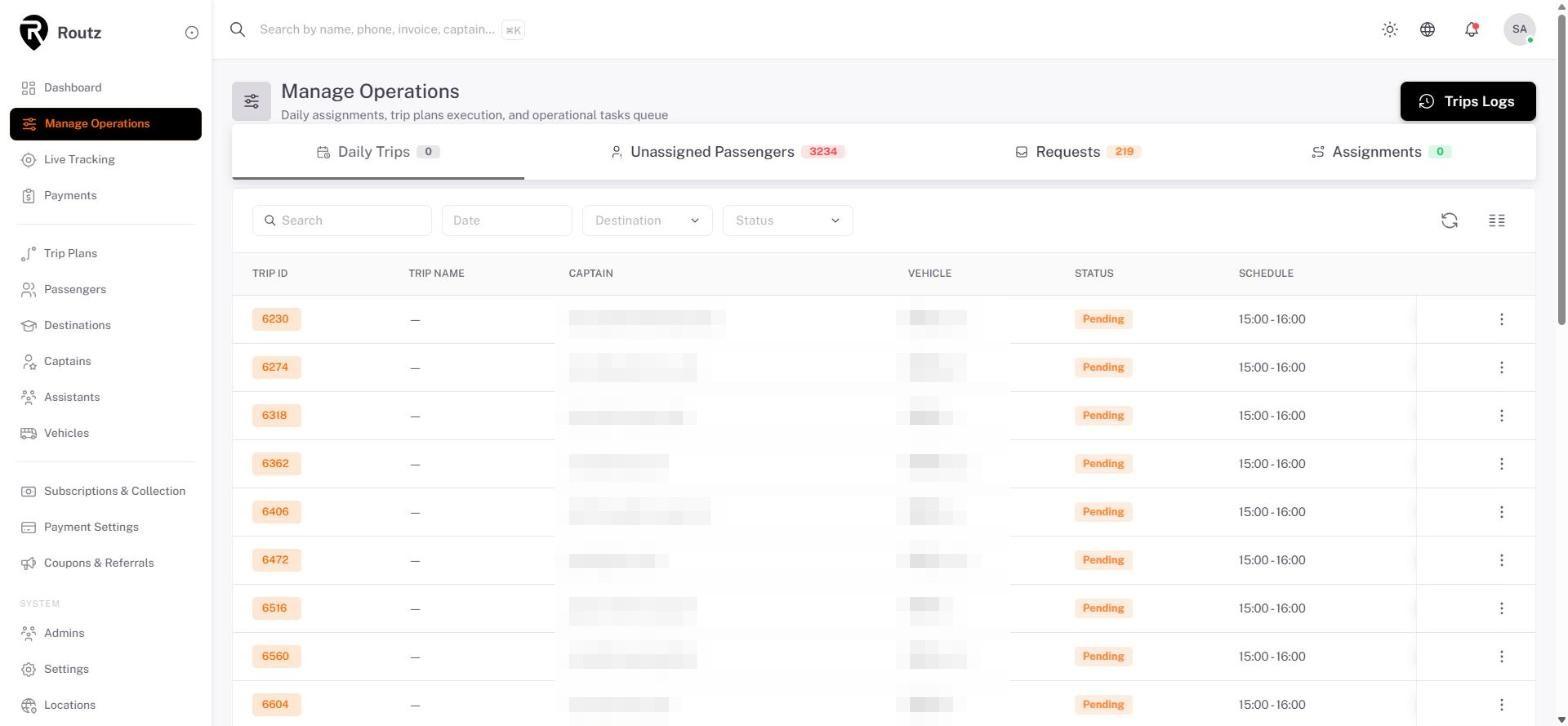
I own the web frontend: the admin and client dashboards from the first commit, the shared component library, and the frontend workflows for drivers, trips, billing, and subscriptions. I also built the real-time layer across the stack: the socket services and the tracking and chat features that run in the dashboards and inside the mobile apps. The native mobile apps themselves are built by the mobile team.
The problem
A school or company transport team runs dozens of daily trips with drivers, assistants, stops, and passengers that change every week. The control room needs one live view of every active vehicle, families want to know where the bus is and to pay for their seat without calling the office, and drivers need clear instructions trip by trip. All of this has to work in Arabic and English, because the operators and families are in Egypt and the Gulf.
When I joined, the web application did not exist yet. The brief was to build the operator dashboards from the ground up while the real-time features were designed at the same time.
How it is built
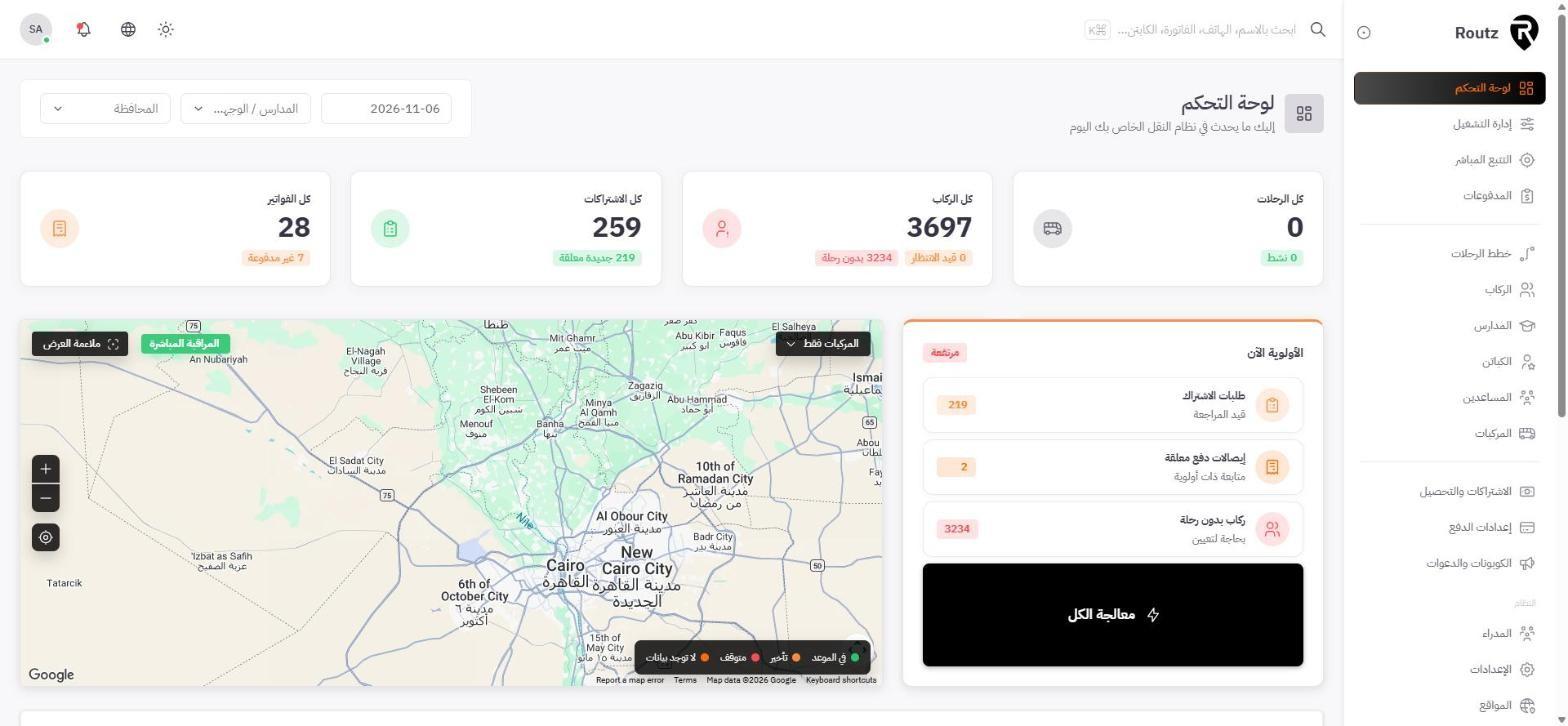
The web application is a Vue 3 single-page app with two surfaces: an admin dashboard for Schoolz and a client dashboard for each operator. Both are built from one shared component library and a set of composables, so every screen works in Arabic (right-to-left) and English.
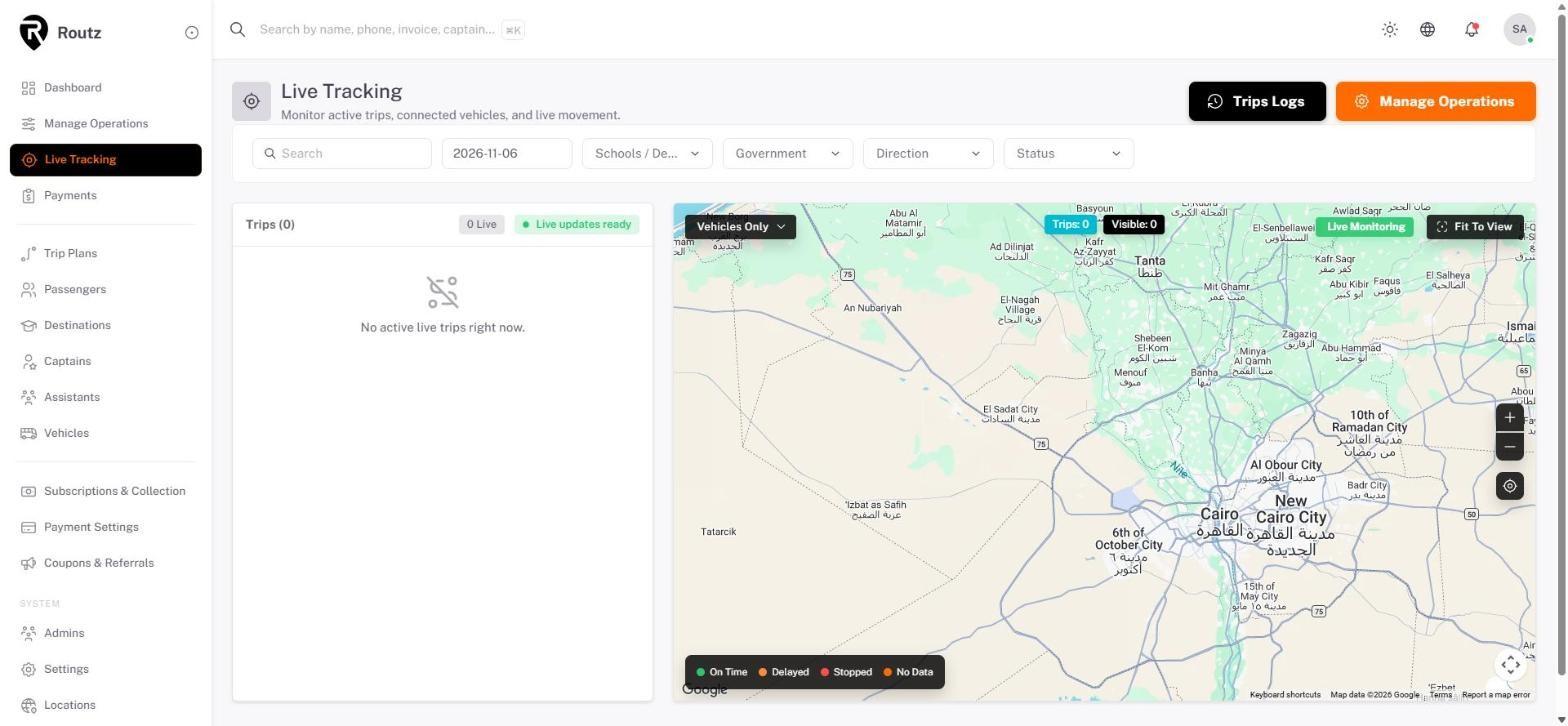
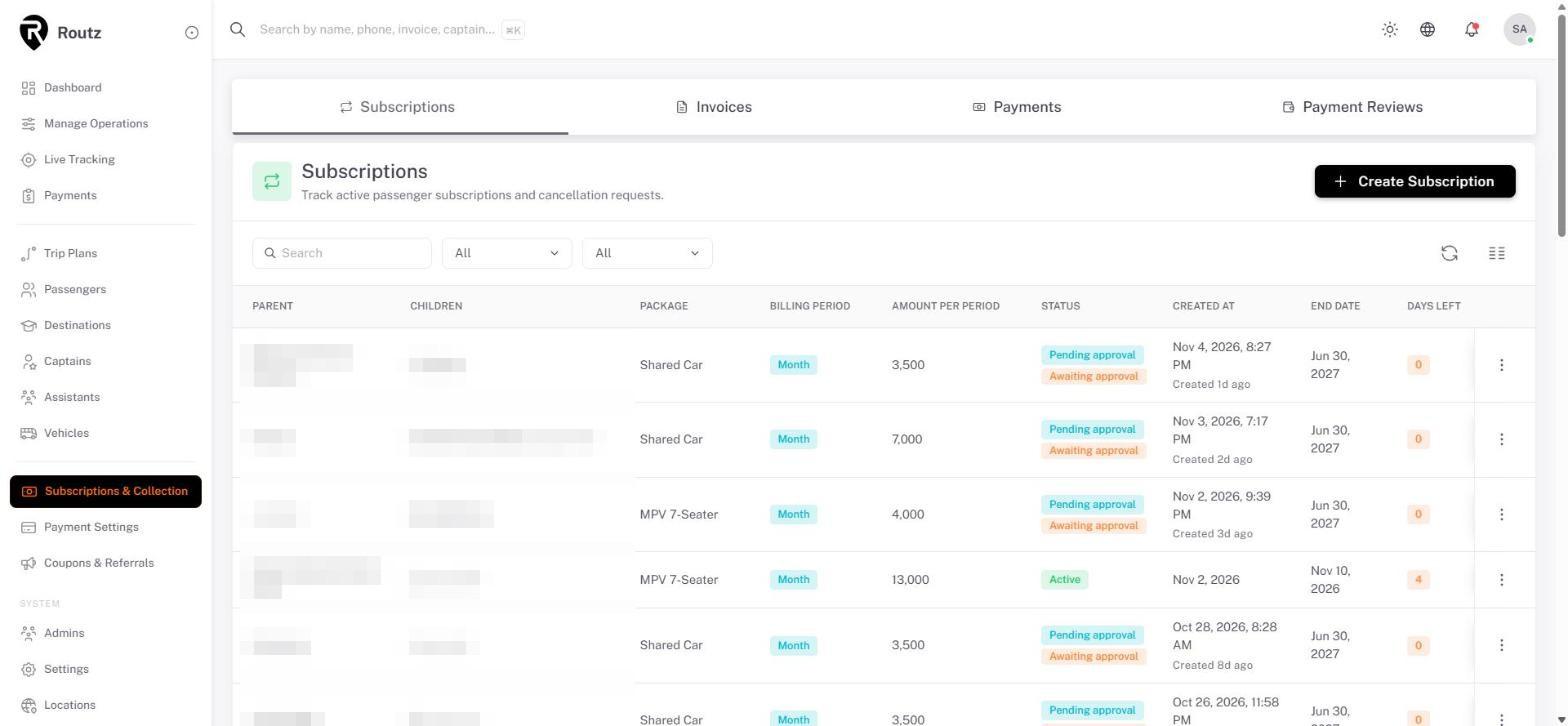
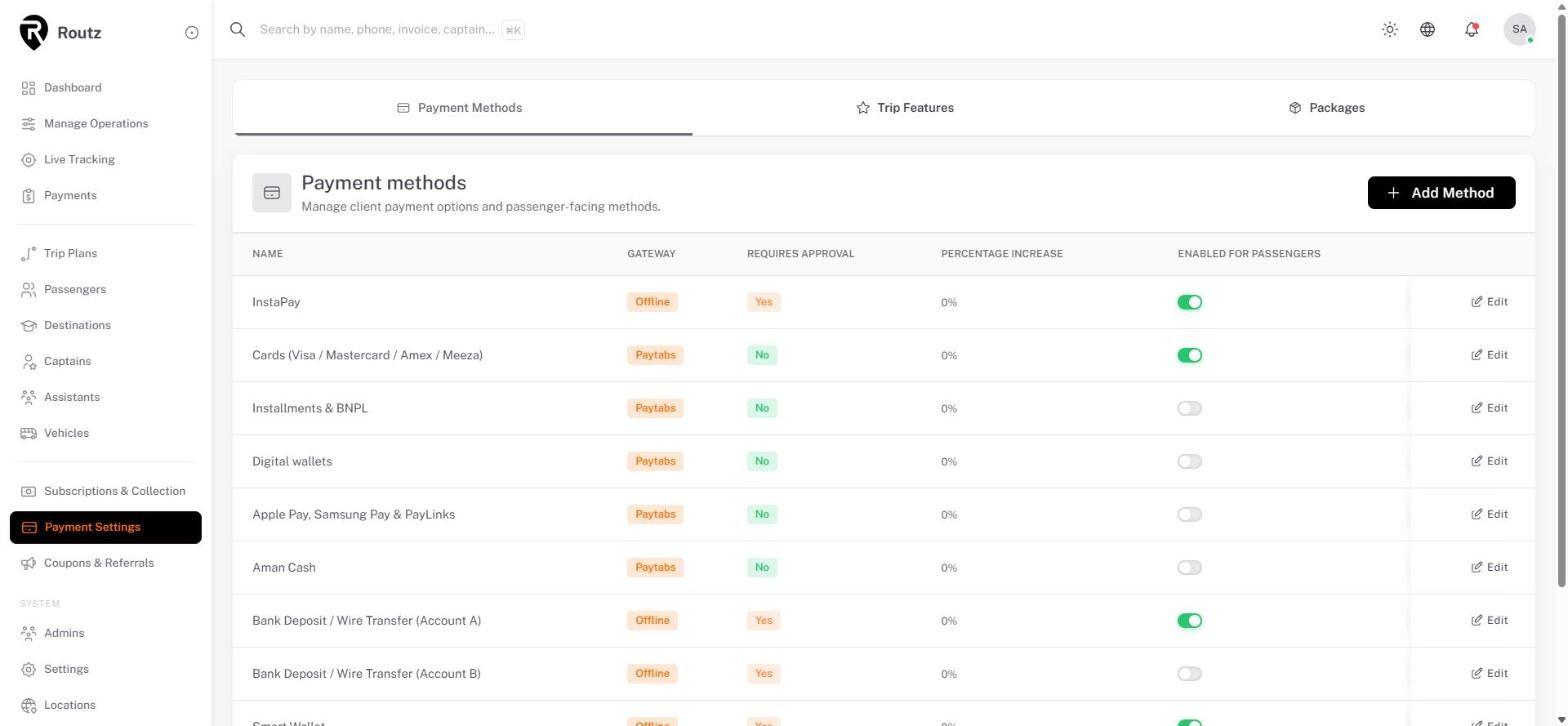
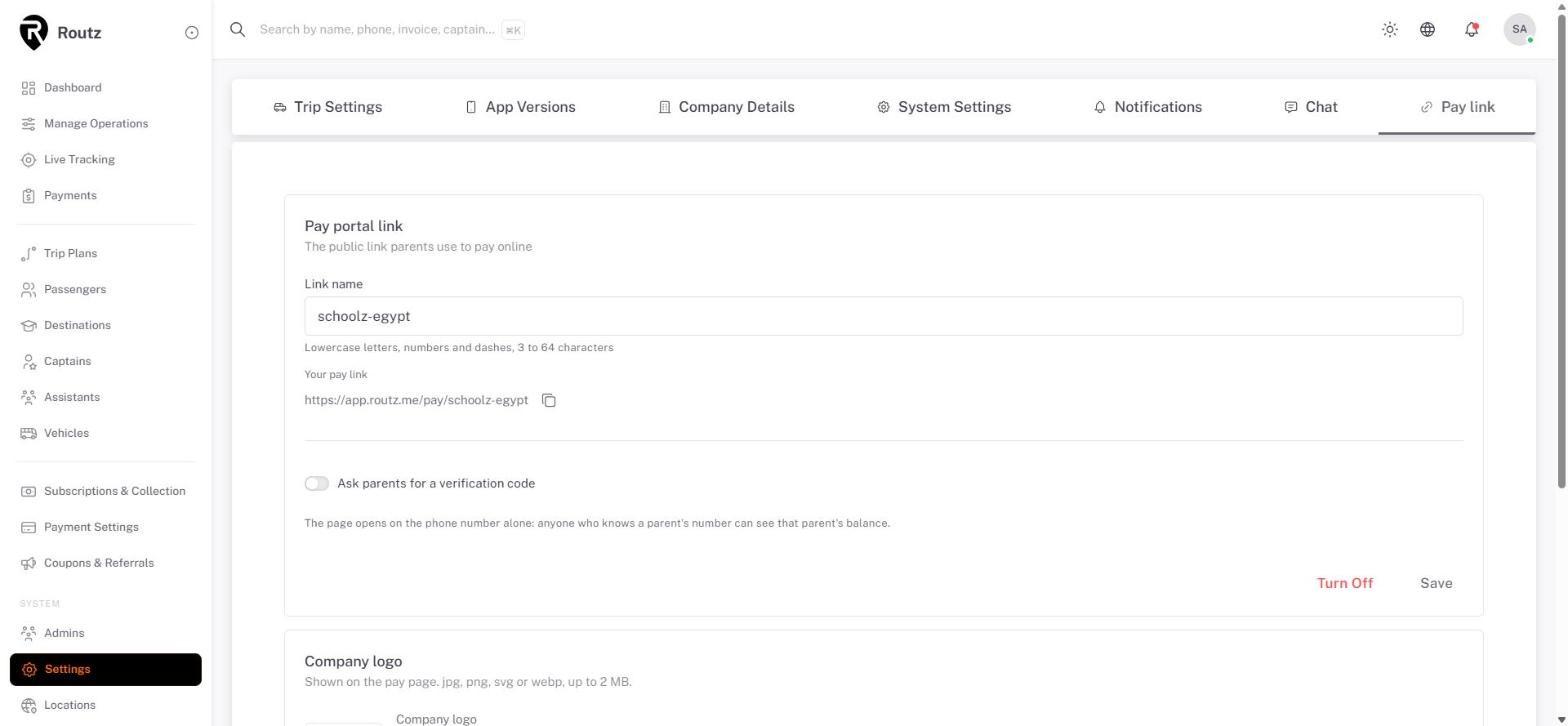
Live data comes from custom Node.js socket services that I built end to end: the driver app pushes GPS positions, the services fan them out to the dashboards and the passenger app, and the same channel carries the in-app chat between operators, passengers, and drivers on web and mobile. Mapping and geocoding APIs provide route planning, stop search, and the live map. Passenger subscriptions run through an in-app flow (registration, package selection, PayTabs online payment) that feeds the operator's billing screens.
Routz web app (Vue 3, Arabic/English)
        ├── Admin dashboard (Schoolz) · Client dashboard (operators)
        ├── Shared components and composables (RTL-first)
        └── Mapping and geocoding APIs (routes, stops, live map)
                    │  socket events
                    ▼
Custom Node.js socket services (built end to end)
        ├── Live GPS positions: driver app → dashboards and passenger app
        └── In-app chat: operators ↔ passengers ↔ drivers (web and mobile)
                    │
                    ▼
Subscriptions: in-app registration → package → PayTabs payment → billing
Key decisions
Custom socket services instead of polling
Live positions and chat are the core of the operator experience; a push channel keeps the map current without hammering the API.
One shared component library for both dashboards
Admin and client screens share tables, forms, and map widgets, so right-to-left and translation are solved once.
PayTabs for passenger payments
A gateway used across Egypt and the Gulf lets families pay with local cards inside the app.
Mapping and geocoding APIs rather than a custom map stack
Route planning and stop search depend on accurate geocoding; the APIs let the team focus on the workflows around the map.
What it changed for the product
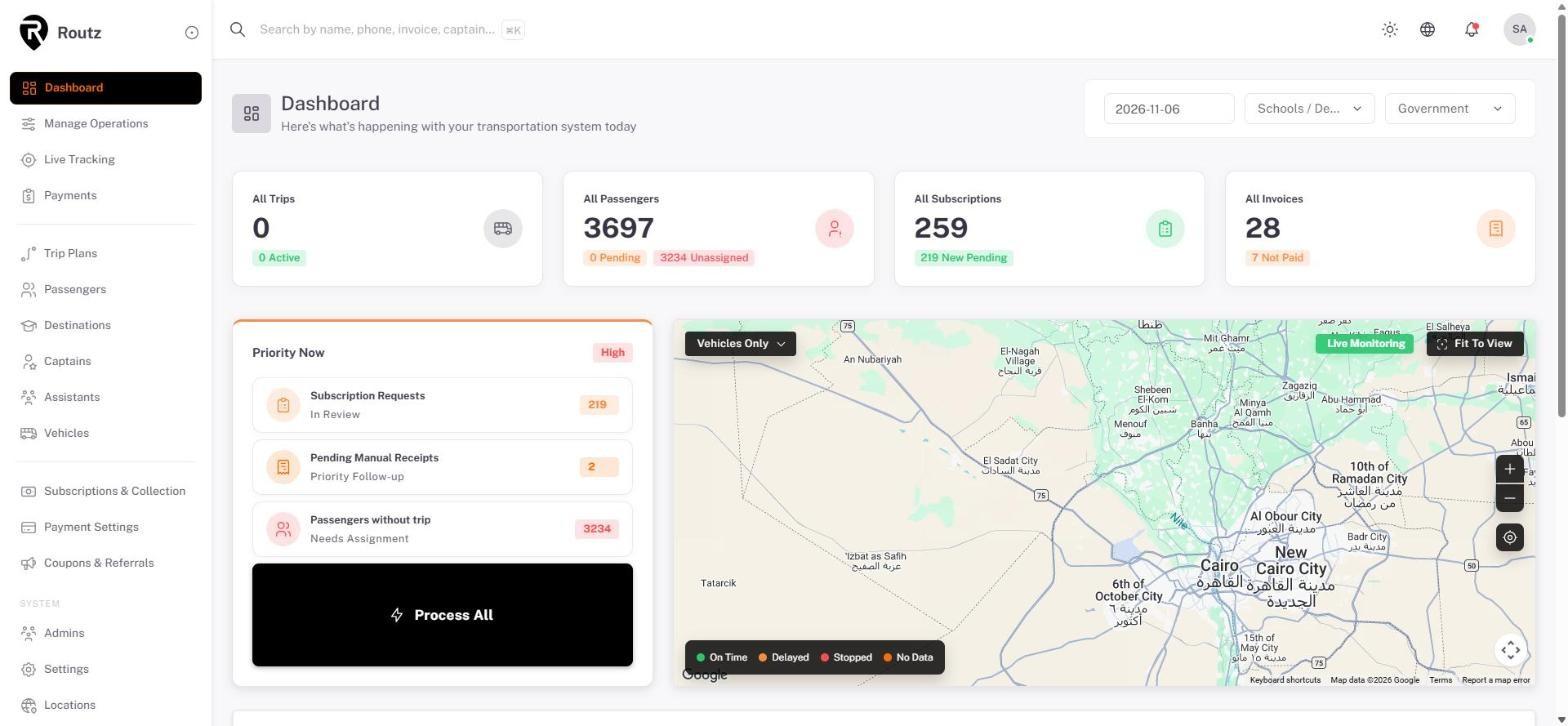
- Gives the control room a live view of active trips and driver locations.
- Lets families register, choose a package, and pay online instead of calling the office.
- Puts operators, passengers, and drivers in one chat thread per trip.
- Serves operators and families in Arabic or English from the same code.
Hard parts and how I solved them
A live view of every active trip
Chat between operators, passengers, and drivers
Families paying without the office
Routes and stops on a map
One interface in two directions
Stack and what each part does
- Vue 3Admin and client dashboards, built from the ground up
- Node.js socket servicesLive trip and driver-location updates, in-app chat
- Mapping and geocoding APIsRoute planning, stop search, live map
- PayTabsOnline payment in the passenger subscription flow
- Arabic and EnglishRight-to-left first, shared components and composables
Highlights
Screens
Dashboard screens are from the production operator app of a live tenant, captured in November 2026 outside school hours. Parent, child and driver names and plate numbers are pixelated. The mobile screens are from the public site at routz.me.